
Besides the bills, the government has listed the first batch of supplementary demands for grants for 2023-24 for presentation, discussion and voting during the session.
According to FADA, automobile retail trade and service industry comprises a network of 9,500 automobile dealers and their service stations engaged in sale, service/repair and spares of vehicles across segments, is an essential link in automotive business and a significant stakeholder.

Customs and excise duty rates have been amended mainly to promote Make in India.

'In terms of incentives, if you think about it, hybrids are a 20-year-old technology.'

The GST Council, headed by Finance Minister Nirmala Sitharaman and comprising representatives of all states and Union territories, will have its 37th meeting in Goa against the backdrop of economic growth hitting a six-year low of 5 per cent in the first quarter of the current fiscal.
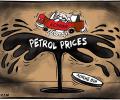
The logic of deregulation was that the consumer was protected no matter what the price of crude. But now the reverse has happened. The government is protected no matter what the price of crude, observes Aakar Patel.

'We are not opposed to any Indian language. We are against Hindi imposition.'

Goods and services tax (GST) collections from mobile device companies, amounting to Rs 1.82 trillion between 2020-21 (FY21) and 2023-24 (FY24), have already generated more than five times the revenue for the government compared to the Rs 34,149 crore allocated under the production-linked incentive (PLI) scheme for mobile devices over six years ending 2025-26 (FY26). Currently, the GST on mobile devices stands at 18 per cent.
This growth seen by the consumer goods was led mainly by the durables market, which rose 17.6%, the highest in 11 months

During 2023, the Indian real estate sector - both housing and commercial - witnessed buoyancy fuelled by demand, supply, and absorption, and the sector is banking on the upcoming Budget to keep the momentum going. Mumbai-based Sattva Group wants the government to focus on the critical pillars for long-term growth. The company emphasised on the infrastructure boom with increased allocation, lower goods and services tax (GST) rates, incentives for affordable housing and single-window clearance to fast-track projects and support liquidity.

At least 120 insurance intermediaries and aggregators from across the country are under scrutiny, mainly from Mumbai, Gurugram and Bengaluru.

Post-election capital expenditure (capex) has been weak at 2 per cent year-on-year (Y-o-Y) in M9FY25. The FY25 revised estimates (RE) indicate 7 per cent growth in FY25 against FY24, implying 21 per cent Y-o-Y growth in Q4FY25 government capex.

Ahead of the first meeting of the top decision-making body in nearly eight months, finance ministers of eight states ruled by non-Bharatiya Janata Party and like-minded parties -- Rajasthan, Punjab, Chhattisgarh, Tamil Nadu, Maharashtra, Jharkhand, Kerala and West Bengal -- have devised a joint strategy to press for a zero tax rate on Covid essentials, sources said.

FBT was an unpopular tax and withdrawn before the General Elections in 2009
'We crossed Rs 1.7 trillion in three months this financial year.'

The Union Cabinet on Wednesday approved changes to GST laws to levy a 28 per cent tax on the full face value of bets in online gaming, casinos and horse race clubs, sources said. The amendments to the Central GST (CGST) and Integrated GST (IGST) acts, which were approved by the GST Council last week, are likely to be introduced in the ongoing monsoon session of Parliament, which will end on August 11. The GST Council in its 51st meeting on August 2 recommended amendments to the Schedule III of the CGST Act, 2017, to provide clarity on the taxation of supplies in casinos, horse racing and online gaming.

Gandhi asserted that the Congress is going to defeat the BJP and its ideology.
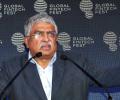
'Binary fission will happen -- startups will lead to more startups.'
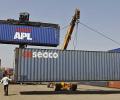
With exporters' claim for over five months still pending, liquidity has been wiped out and the process of finalising new contracts has been held up.

Overall market reaction to the Budget was neutral. Investors absorbed the changes to the tax rates (positive for salaried class) and capital gains taxes (CGTs, negative due to the removal of indexation and increases. Other proposals largely pertain to supporting rural development, buybacks taxed as dividends, Custom duty changes that impact multiple sectors, higher outlays for clean energy, etc. There's some moderation in the growth of capex outlay across defence, fer

Apprehensions following the imposition of GST on sports equipment has forced the National Rifle Association of India (NRAI) to 'approach' the finance ministry and take up the cudgels on behalf of a very concerned shooting community.
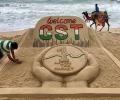
The collections from Goods and Services Tax (GST) grew by 15 per cent to over Rs 1.49 lakh crore in December 2022, indicating improved manufacturing output and consumption demand, besides better compliance. This is the 10th month in a row that the revenues have remained above the Rs 1.4 lakh crore mark. The collection in November was about Rs 1.46 lakh crore. "The gross GST revenue collected during December 2022 is Rs 1,49,507 crore, of which CGST is Rs 26,711 crore, SGST is Rs 33,357 crore, IGST is Rs 78,434 crore (including Rs 40,263 crore collected on import of goods) and cess is Rs 11,005 crore (including Rs 850 crore collected on import of goods)," the ministry said in a statement.

Amid the heavy downpour in Bengaluru, residents of many flood-affected areas have taken to social media to pour out their woes ranging from waterlogging to complaining about "crumbling" infrastructure.

Leaders who built and manage these incredible global companies cannot be tyrants, slave-drivers, or idiots. Essentially what they are saying falls under the definition of rallying the troops, inspirational talk, like the usual coach-speak with the team before a match, asserts Shekhar Gupta.

The government last fiscal missed its direct tax collection target, and for this financial year it has set a higher revenue mobilisation goal of Rs 13.80 lakh crore.

About a dozen states cutting across party lines on Wednesday pitched for extending the mechanism to compensate states for revenue lost from the implementation of GST beyond June 30, but no decision was taken. Briefing reporters about deliberations at the two-day meeting of the GST Council in Chandigarh, Union Finance Minister Nirmala Sitharaman said finance and other ministers of 16 states spoke on the compensation issue. Of the 16 states, 3-4 spoke of evolving their own revenue stream to break from the compensation mechanism, she said.
